Mallorca is the largest of the Balearic Islands, and its best sights lie well away from Palma: the hairpin roads of the Serra de Tramuntana, Cap de Formentor, the villages of Valldemossa and Deià, and the coves of the east coast. Buses reach them rarely and only along the main roads, so car rental in Mallorca is the easiest way to see the mountains and the sea in one day.
Use the form below to compare local and international suppliers at Palma airport, in the city and in the resorts. Bookings are made with our partner Discover Cars, where you see the full price, insurance terms, deposit and fuel policy before you pay.
The form is set to Palma de Mallorca Airport (PMI). To collect a car elsewhere, start typing a name such as Alcúdia, Cala Millor or Port de Palma. Prices are shown in US dollars.
Almost every visitor flies into Palma de Mallorca Airport (PMI, Son Sant Joan), the island's only airport, 8 km from central Palma. Major suppliers have desks in the arrivals hall; many local companies are off-airport and run a free shuttle. The offer card shows where the car is handed over. Summer queues are common, so allow 30–60 minutes for pickup.
For just a few days you can collect a car in Palma, Alcúdia, Cala Millor or another resort town, and ferry passengers from Barcelona or Valencia can use offices near the port of Palma. Mallorca car rental at the airport or in Palma is usually cheaper than in small resorts.
Seasonality is stronger than in the Canaries: demand peaks from April to September, and in winter prices fall several times over. Below is the average daily rate at Palma airport according to Discover Cars data from 25 October 2026.
| Months | Average price per day |
|---|---|
| November, February | €5–6 |
| January | about €12 |
| October, December | about €18 |
| March, June, July, September | €21–24 |
| May | about €26 |
| April, August | about €30 |
In late October the cheapest offers, a manual mini (Fiat 500, Toyota Aygo) or an automatic (Kia Picanto, Hyundai i10), cost around €1–1.50 per day. That rate includes only basic insurance, and at the desk the supplier may block a large deposit or sell its own full cover. Compare the total with insurance and fuel policy, not the daily rate. The search form shows the exact price for your dates.
You need a passport, a driving licence and a bank card in the main driver's name. Most suppliers accept licences in the Latin alphabet, but some also require an International Driving Permit, as stated under "Important information" in each offer. The minimum age is usually 21, drivers under 25 pay a young driver fee, and some companies require one or two years of experience.
The price almost always includes basic insurance with an excess, the amount you pay yourself if the car is damaged. It depends on the supplier and car class and is shown on the offer card. Full cover, bought at the desk or through Discover Cars, reduces it to zero.
At pickup a deposit, usually equal to the excess, is blocked on your card. International companies require a credit card; some local ones accept debit cards if you buy their full insurance. "Full to full" means you return the car with a full tank. "Full to empty" looks cheaper when you book, but you prepay a tank at the supplier's rate, usually plus a service fee.
Spanish rules apply: 50 km/h in towns (30 km/h on streets with one lane each way), 90 km/h on ordinary roads, 120 km/h on motorways. The alcohol limit is 0.5 g/l, or 0.3 g/l for drivers with under two years' experience.
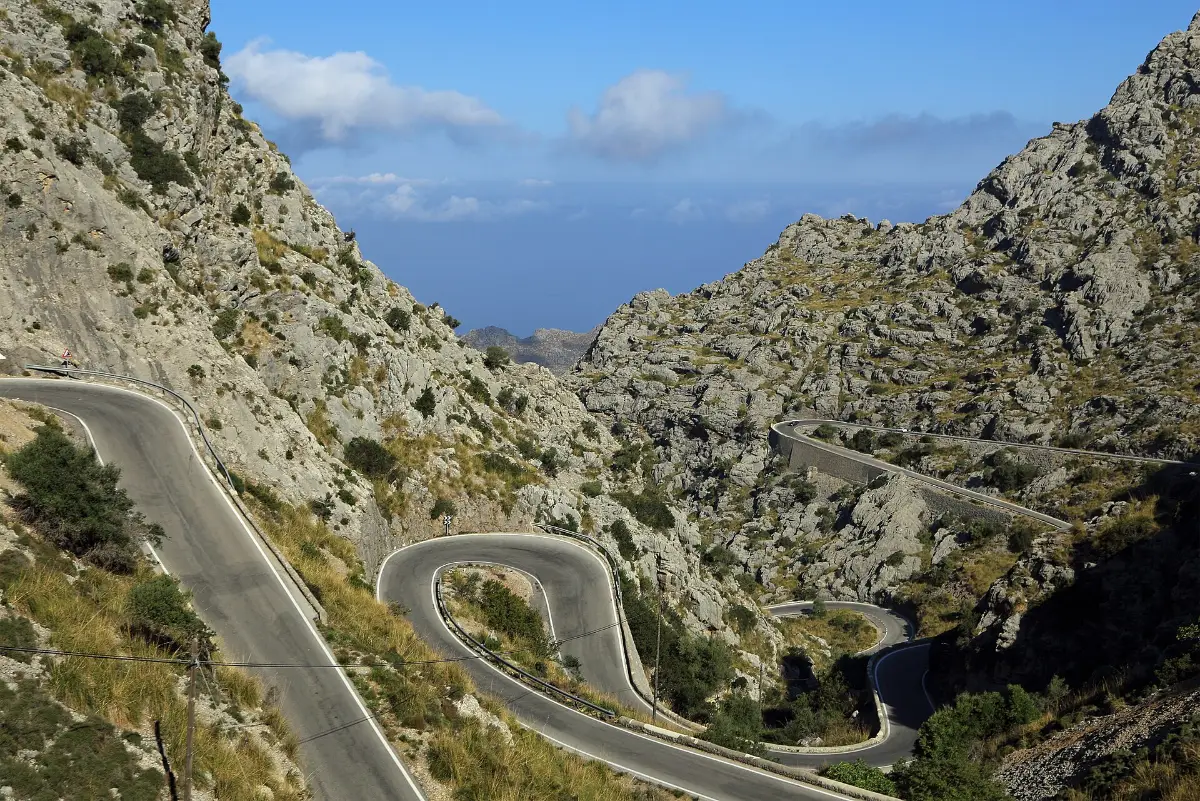
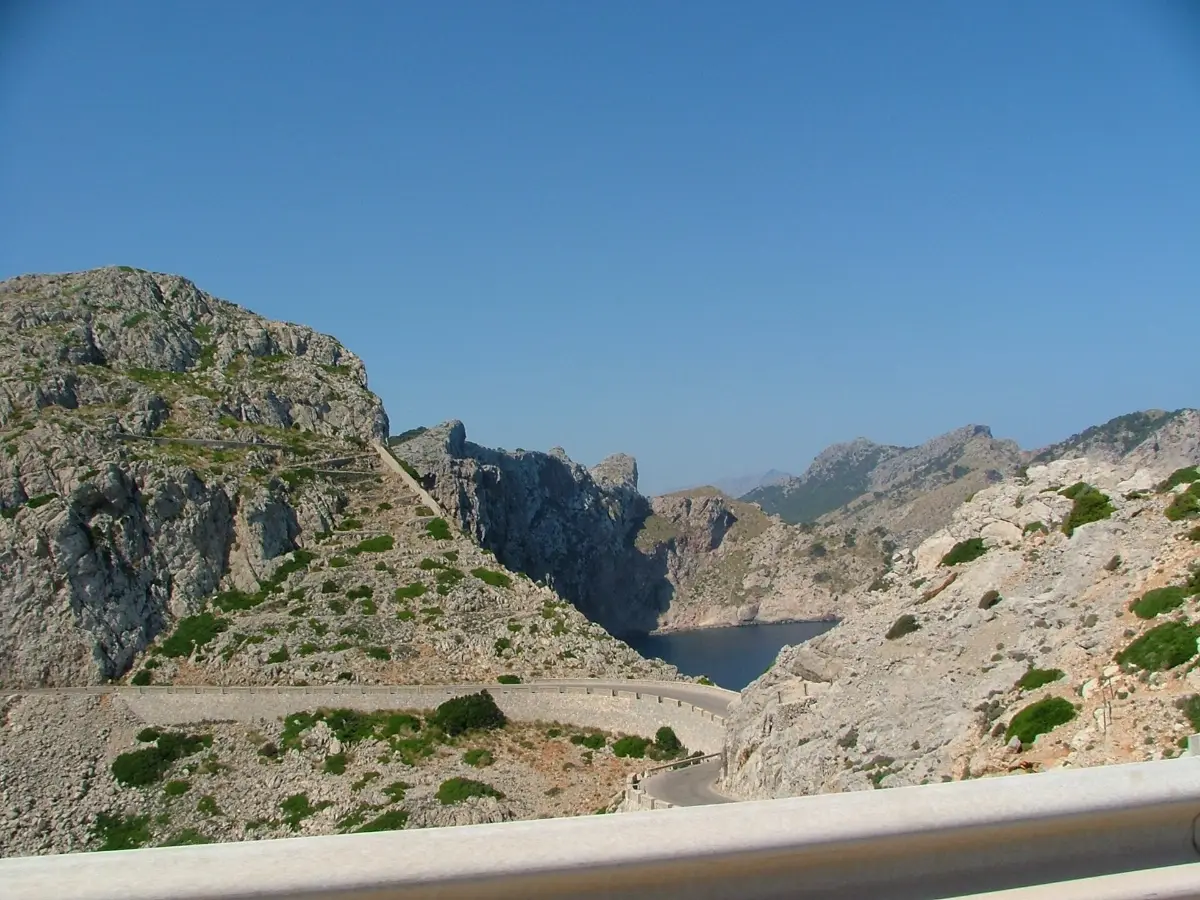
The Ma-1, Ma-13 and Ma-19 motorways and the Ma-20 ring road are free, and the island has no toll roads or tunnels. The Tramuntana roads, the coastal Ma-10 and the Ma-2141 to Sa Calobra, are narrow, twisty and busy with cyclists. Overtake a cyclist only with at least 1.5 metres of clearance, and on multi-lane roads move fully into the next lane.
Blue lines (ORA zone) mean paid, time-limited parking, white lines are free, and yellow means no parking. Only residents may drive into Palma's camera-controlled historic centre, so use an underground car park. Inside the Ma-20 ring road a low-emission zone admits only cars with a DGT environmental sticker; rental cars are almost always new and Spanish-registered, so this rarely affects them.
Ferries sail from Alcúdia to Menorca and from Palma to Ibiza and the mainland, but most suppliers do not let rental cars leave the island, and insurance does not cover the crossing.
If your trip includes the mainland, see our page on car hire in Spain, and for a winter break in the Canaries, our guide to renting a car in Tenerife. More destinations are in our car rental abroad section.


