Tenerife is the largest of the Canary Islands, and its highlights are spread far apart: Mount Teide in the centre, the Masca gorge in the west, the laurel forests of Anaga in the north-east, and the beaches and resorts in the south. Tour buses follow one route on a fixed timetable, while car rental in Tenerife lets you drive up to the Las Cañadas caldera, have lunch in Garachico and be back on the coast for sunset, all in one day.
In the form below you can compare local and international suppliers at the island's airports, ports and resort towns. Bookings are made on the website of our partner Discover Cars, where you see the full price, insurance terms, deposit amount and fuel policy before you pay.
The form is preset to Tenerife South Airport (TFS). To pick up a car elsewhere, start typing a place name such as Tenerife North, Los Cristianos or Puerto de la Cruz. Prices in the form are shown in US dollars.
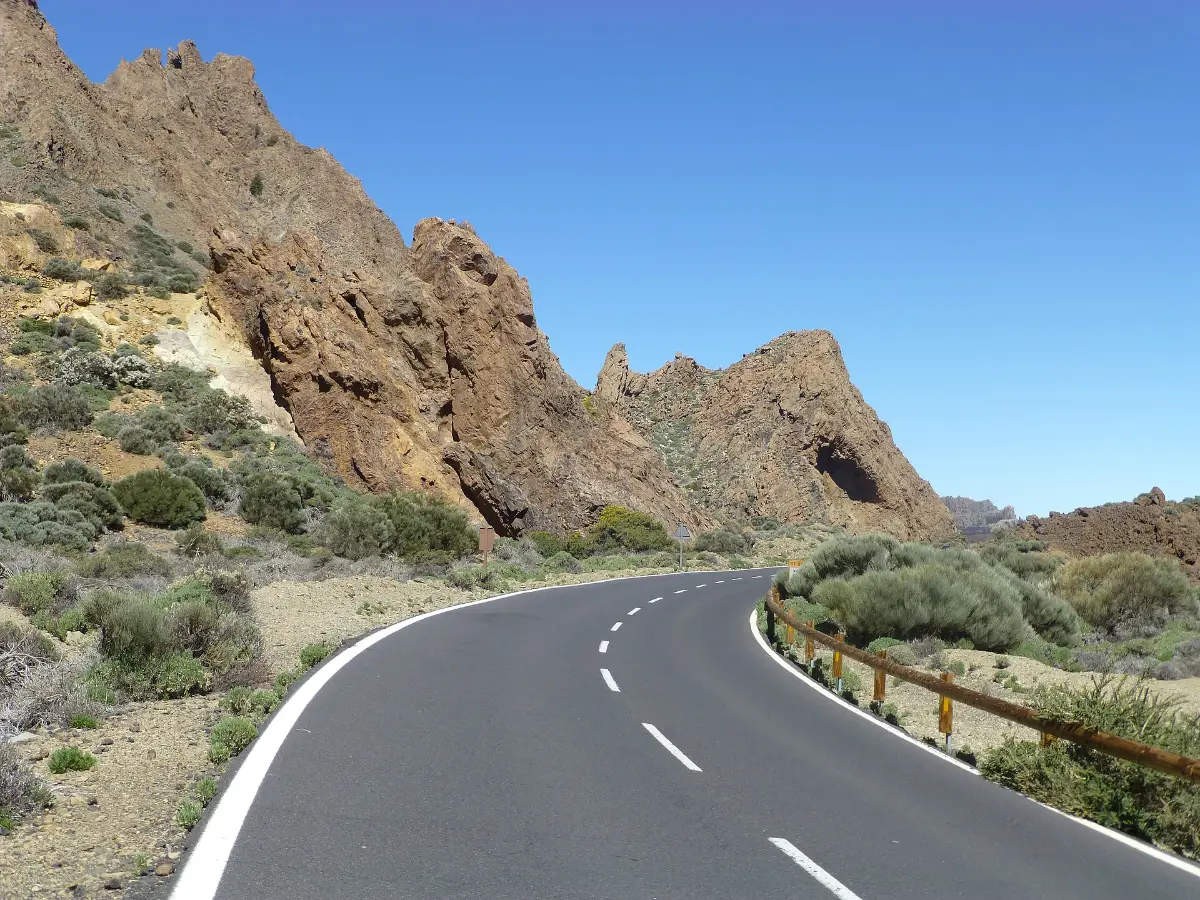
The island has two airports, and the right one depends on where you are staying. Most holiday flights land at Tenerife South Airport (TFS, Reina Sofía), about 20 minutes from Los Cristianos, Playa de las Américas and Costa Adeje. Rental desks are in the arrivals hall; some suppliers have offices outside the terminal and run a free shuttle, which is stated in the offer details.
Tenerife North Airport (TFN, Los Rodeos) sits next to La Laguna, 15 minutes from Santa Cruz. It suits travellers staying in the north, in Puerto de la Cruz, La Orotava or La Laguna. The two airports are about an hour apart via the TF-1 and TF-5 motorways, so it is easiest to collect the car where you land.
Prices depend heavily on the season. Winter is high season in the Canaries: in December and February people come for the warm weather, and Tenerife car rental costs almost twice as much. Prices are lowest in May, June and September. The table shows the average daily rate at Tenerife South Airport according to Discover Cars data as of 25 October 2026.
| Months | Average price per day |
|---|---|
| September, June, May | €12–14 |
| July, April, October | €16–17 |
| January, March, August | about €20 |
| November, February | €22–24 |
| December | about €29 |
The cheapest options are mini and economy cars with a manual gearbox (Kia Picanto, Fiat 500, Opel Corsa): in October they started at roughly €11–12 a day. Automatics cost more, with economy automatics from €18 and compact crossovers from €17–22. These figures are a guide, not a quote for your dates; the search form shows the exact price. Booking earlier and renting for longer lowers the daily rate.
To rent a car you need a passport, a driving licence and a bank card in the main driver's name. Most suppliers accept licences printed in the Latin alphabet, but some also ask for an International Driving Permit; this is stated under "Important information" in each offer. If in doubt, get an IDP before you travel.
The minimum age is usually 21, and drivers under 25 pay a young driver fee. Some companies also require one to two years of driving experience.
The price almost always includes basic cover with an excess, the amount you pay yourself if the car is damaged. It depends on the supplier and car class and is shown in the offer details. You can reduce it to zero with full cover, either at the rental desk or when booking through Discover Cars.
At pick-up a deposit, usually equal to the excess, is blocked on your card. Many companies accept only a credit card. Local island suppliers are more likely to take debit cards, provided you buy their full insurance.
Spanish traffic rules apply on the island. Speed limits are 50 km/h in towns (30 km/h on streets with one lane in each direction), 90 km/h on ordinary roads and 120 km/h on motorways. The blood alcohol limit is 0.5 g/l, or 0.3 g/l for drivers with less than two years' experience.
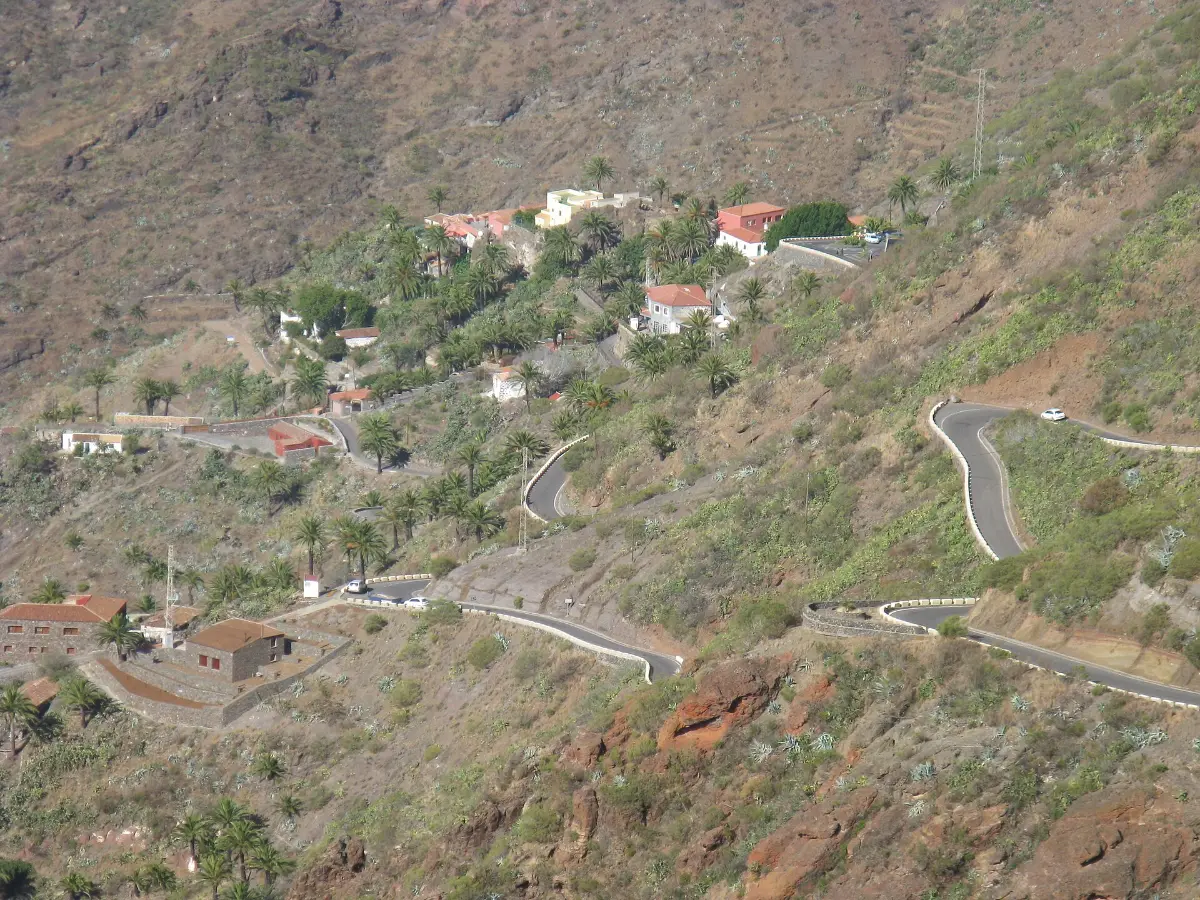
The TF-1 and TF-5 motorways are toll-free and link the south, the capital and the north. Mountain roads are a different story: the TF-21 and TF-38 climb above 2,000 metres to Teide, and the TF-436 to Masca is narrow, with tight hairpins and stretches without road markings. For these routes a car with a stronger engine and an automatic gearbox is more comfortable.
Blue lines mark paid parking, payable at a meter or in an app. White lines are free, and yellow lines mean no parking. In Santa Cruz and La Laguna an underground car park is the easiest option. Fuel in the Canaries is noticeably cheaper than on mainland Spain, because a local tax, IGIC, applies instead of VAT. There are few petrol stations in the mountains, so fill up before driving to Teide.
Ferries run from Los Cristianos in the south to La Gomera, and from Santa Cruz to Gran Canaria. Most suppliers do not allow rental cars to leave the island, and insurance does not cover the crossing. If you plan a day on La Gomera, either choose a company that explicitly permits the ferry or travel as a foot passenger and rent a separate car there.
If your trip covers other regions too, see our page on renting a car in Spain, and find more destinations in our car hire abroad section.


