


Updated 6 November 2026.
If you put petrol in a diesel car, the high-pressure fuel pump and injectors are most at risk, because petrol does not lubricate them the way diesel does. Diesel in a petrol car is usually cheaper to fix, but it fouls the spark plugs and the engine may cut out. The rule is the same for both: the British motoring club RAC advises you not to turn on the ignition and to call someone who can drain the fuel. The worst damage comes after the engine starts, so if it has not run, draining is usually enough.
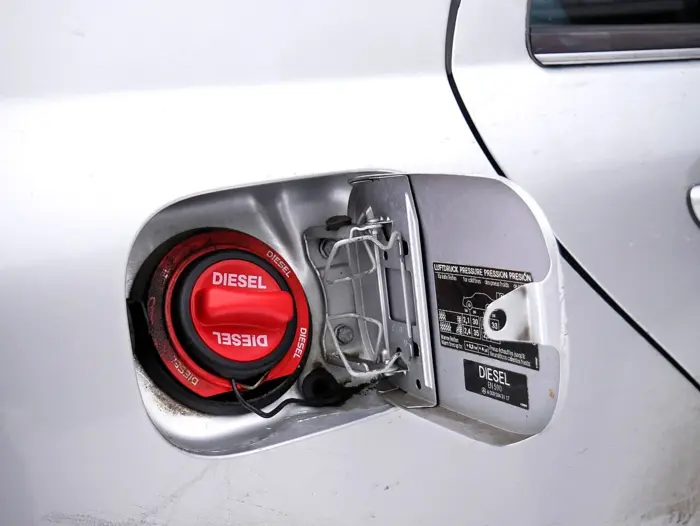
A label on the fuel flap. Photo: Santeri Viinamäki / Wikimedia Commons, CC BY-SA 4.0
What to do: table by situation
| What happened | What to do | What is at risk |
|---|---|---|
| Any wrong fuel, ignition not turned on | leave it off, tell station staff, call for draining | usually just draining and fresh fuel |
| Petrol in a diesel, engine has run | stop somewhere safe, switch off, call a tow truck | pump, injectors, fuel lines, at worst the engine |
| Diesel in a petrol car, engine has run | the same | misfiring, smoke, fouled spark plugs, risk to the catalytic converter |
| Added a little and noticed at once | do not start, ask a garage | nobody guarantees a safe share |
Step by step if you are still at the station
- Do not turn on the ignition or press Start. In many cars, the electric pump in the tank starts running as soon as the ignition is on.
- Keep the receipt and tell the attendant what happened.
- Push the car away from the pump in neutral if you can. With the ignition off, the steering is often locked and an automatic selector usually stays in P. In that case, leave the car where it is and ask the staff what to do.
- Call a garage or a tow truck. Do not drain the fuel yourself: petrol ignites easily, and a modern tank is hard to reach.
- Call your insurer. Whether your policy covers misfuelling depends on its terms.
According to the RAC, draining takes from a few minutes to a few hours, depending on how much fuel there is and how easy the tank is to reach.
What happens if you put petrol in a diesel car
Diesel also lubricates the fuel system, and petrol does not. Common Rail systems reach pressures of up to 2,000 bar, and injector tolerances are measured in microns. Fuel system maker Delphi warns that damage spreads quickly and may mean a new pump, filter, injectors, pipes and rail, and sometimes a new engine.
At first the car drives normally, because there is still diesel in the lines. Then come jerking, power loss and unusual noise. If this happens on the road, do not try to reach a garage under your own power: switch off and call a tow truck. If the garage suggests a tow instead, check the car towing rules first.
What happens if you put diesel in a petrol engine
This mistake is rarer: the diesel nozzle is usually wider than a petrol filler neck, although you cannot count on that at every station. The RAC describes the effects: diesel coats the spark plugs and fuel system, the engine misfires and smokes, then cuts out or will not start. Delphi considers this less serious than petrol in a diesel. Do not restart the car to "burn off" the mix, as the RAC also mentions a risk to the catalytic converter.
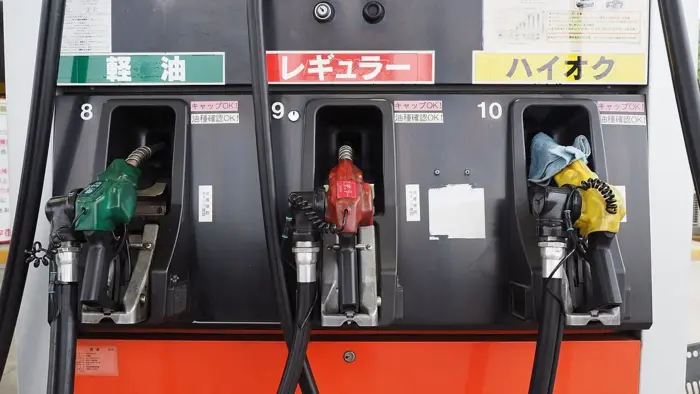
A pump in Japan, where the green nozzle is diesel. Photo: Ka23 13 / Wikimedia Commons, CC BY-SA 4.0
Can you add petrol to diesel?
No. The old tip of adding petrol in winter to stop diesel thickening is dangerous for a modern engine, and we found no maker's manual that allows it. In winter, fill up with winter diesel.
As for "just a little": the RAC says more than 3% petrol in diesel can cause power loss, stalling and damage. In a 50 l tank that is 1.5 l. But Delphi warns that even a small amount is harmful, so 3% is not a safe limit. If you added a few litres, call a garage before you start the engine.
You cannot separate the mix at the station. Petrol and diesel blend, even though diesel is heavier: under the European standards EN 590 and EN 228 its density is 820–845 kg/m³ against 720–775 kg/m³ for petrol. So the fuel is simply drained and replaced.
Who pays for repairs in Ukraine: the station or the driver
It depends on who held the nozzle and what you can prove. In case No. 161/626/17, on 25 July 2019, Ukraine's Supreme Court called filling a diesel car with petrol a sale of defective goods and agreed with an award against the station of UAH 33,000 in damages and UAH 2,000 for moral harm. It was for the station to prove it was not at fault.
There is a caveat. The court relied on the rules of that time, when filling was done by an attendant or under their supervision. The current point 14 of Rules No. 1442 also lets drivers fill up themselves. If you took the nozzle yourself, the station's liability is much smaller, according to a review of court practice on SUD.UA. Treat this as a guide, not legal advice.
What to keep for a dispute:
- the fiscal receipt or loyalty card data;
- station camera footage: ask them to save it right away;
- a garage report stating the cause, and repair invoices;
- an expert opinion if needed, as some courts require a technical examination.
How to avoid the wrong fuel
Do not rely on nozzle colour, which differs between networks and countries. Read the label on the nozzle itself. Stations in the EU also use symbols: petrol in a circle (E5, E10), diesel in a square (B7). If an attendant fills up for you, name the fuel out loud and watch what they pick up.
It is easiest to go wrong with an unfamiliar car, for example after switching from petrol to diesel. Before your first fill-up, look inside the fuel flap, where the fuel type is usually shown.
If this happens with a rental car

A tow truck. Photo: Dietmar Rabich / Wikimedia Commons, CC BY-SA 4.0
Do not start the engine, and call the company at once. If you have a BLS rental car, call BLS as soon as you notice the mistake. Even if you have driven a few kilometres, stop, switch off and call. BLS hands over cars with a full tank and expects them back full, so check the fuel type when you collect the car, not at the pump before returning it. Planning a rental for a trip abroad? Pump labels differ there, so remember your fuel's marking in advance.

Hyundai Tucson from the BLS fleet
FAQ
What should I do if I put petrol in my diesel?
Do not turn on the ignition, tell the station staff and call for the fuel to be drained. If you are already driving, stop, switch off and call a tow truck.
What happens if you put diesel in a petrol car?
The engine runs unevenly, smokes and may cut out, because diesel fouls the spark plugs and fuel system. Delphi considers this less serious than petrol in a diesel.
How much petrol can you add to diesel?
We found no safe amount. The RAC mentions problems above 3%, and Delphi warns that even a small amount does harm.
Do diesel and petrol mix?
Yes, so you cannot separate them on the spot. The mix is drained.
Will a diesel run on petrol?
At first it may run on the diesel left in the lines, which is dangerous: while the engine runs, the mix passes through the pump and injectors.